Central Texas Farm and Ranch Market Update: What Landowners and Buyers Need to Know in the Big Country
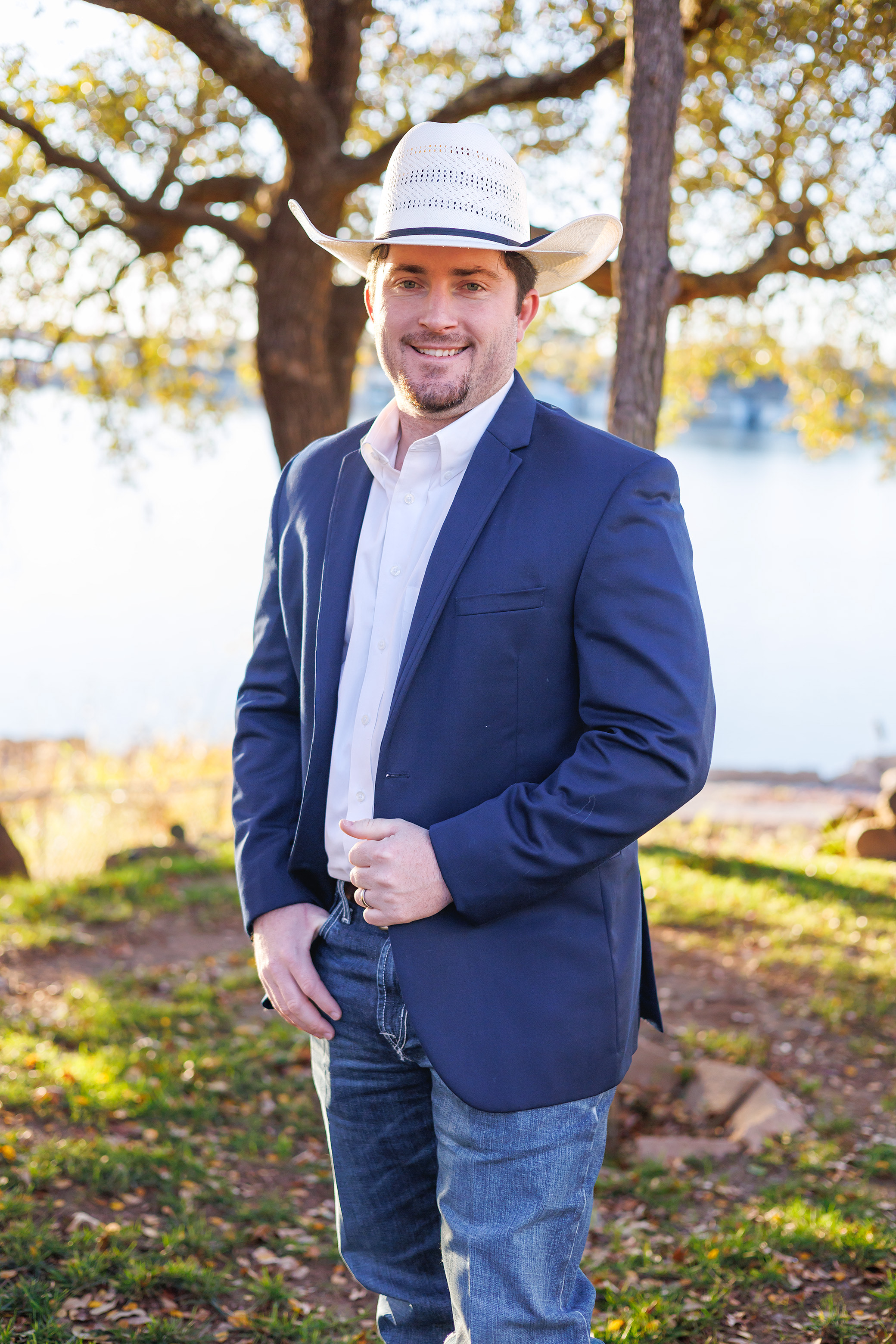
Hoelscher Ranch Group
Texas Land Specialist
This article is for general information only and is not legal, tax, or professional advice. Consult a licensed attorney, CPA, or other qualified professional for advice specific to your situation.
If you own land in Coleman, Brown, Callahan, Concho, McCulloch, Runnels, or Taylor County—or you're looking to buy in this part of Central Texas—you've probably noticed that the farm and ranch real estate market has been anything but predictable over the past few years. Values that seemed impossible five years ago have become the new baseline, and the forces driving demand aren't going away anytime soon. Whether you're thinking about selling, considering an acquisition, or simply trying to understand what your property is worth in today's market, here's a grounded look at what's happening across the Big Country and what it means for you.
The most fundamental thing to understand about the Central Texas land market is that rural property here has transitioned from a commodity to a multi-use asset class. Buyers are no longer evaluating farms and ranches solely on agricultural income potential. Today's buyers weigh hunting and wildlife recreation, water availability, proximity to growing metros, and even the psychological value of owning land. That last factor may sound abstract, but it's real and it's measurable in sales prices. The desire to own a piece of Texas—to have somewhere to go, something to pass down, a hedge against uncertainty—has never been stronger, and the Big Country sits squarely in the path of that demand.
Across the seven-county area that makes up the heart of this region, land values have broadly appreciated over the past several years, though the picture is more nuanced when you look county by county. Properties in Taylor County and eastern Callahan County benefit from proximity to Abilene, which continues to draw economic activity from healthcare, education, and military sectors tied to Dyess Air Force Base. That metro adjacency commands a premium, particularly for tracts in the 50 to 300 acre range where you see strong demand from buyers wanting rural retreats within an hour or two of home. Brown County and Coleman County, sitting along US Highway 84 and US 67 corridors, have seen steady interest from buyers based in the Metroplex and Hill Country who are priced out of more southern regions but find the terrain and character of the Rolling Plains deeply appealing.
McCulloch and Concho counties represent an interesting chapter in this market story. Historically undersupplied with qualified buyers, these counties are now attracting serious attention for larger ranches—properties in the 500 to 2,000 acre range where a buyer can assemble a genuine working ranch with meaningful deer, turkey, and dove populations. The mesquite and live oak mix that characterizes so much of this country, combined with average annual rainfall ranging from roughly 18 to 26 inches depending on where you stand in the region, creates an environment where land can be productive for both livestock and wildlife simultaneously. That dual-income narrative resonates with today's sophisticated land buyer. Runnels County, anchored by Ballinger and Brady Road, remains strong for cultivated farmland given its comparatively deeper soils and agricultural history in cotton and wheat production.
Water continues to be the single most consequential variable in land valuation across this entire region. In a part of Texas where rainfall is reliable enough to support rangeland but not so abundant that irrigation is taken for granted, the presence of a productive water well, a stock tank with surface acreage, or a creek draw with live water can dramatically separate comparable properties in asking price and days on market. The Colorado River watershed touches portions of several counties here, and properties with riparian access or proximity to Lake Coleman, Lake Brownwood, or O.H. Ivie Reservoir carry a measurable premium. Buyers who understand this prioritize water features over nearly everything else, and sellers who can document well depth, recovery rate, and historical reliability hold a strong negotiating position.
Mineral rights remain a significant consideration in certain parts of the region, particularly as activity in the Permian Basin and surrounding plays continues to influence leasing and royalty interest values. Concho, McCulloch, and Runnels counties in particular have histories of oil and gas activity, and tracts that convey minerals—or at minimum, executive rights—are valued more highly by buyers who understand what they're acquiring. That said, the mineral landscape in Central Texas is complex, and many properties in this area trade without minerals due to historical severance. Understanding what you own, or what you're buying, requires careful review of the title commitment and existing lease agreements. This is an area where consulting a qualified oil and gas attorney is genuinely valuable before closing.
Agricultural exemptions are a subject that comes up in nearly every conversation I have with landowners across these counties, and for good reason. Texas property taxes are not trivial, and the difference between paying taxes on appraised market value versus productivity value is substantial on any tract of meaningful size. The good news is that the Big Country's agricultural traditions—cattle grazing, hay production, goat and sheep operations, hunting leases, and wildlife management—provide multiple pathways to maintain an ag exemption under Texas law. Wildlife management as an alternative to traditional agriculture has become increasingly popular in this region, and the native brush and terrain of these counties lend themselves well to certified programs involving managed deer populations, brush management for habitat, water development, and predator control. If you're a buyer purchasing land that currently holds an ag exemption, verifying that the qualifying use is properly documented and transferable is an important step before closing. If you're a landowner who has let a qualifying use lapse, the transition back to exempt status can involve a waiting period and retroactive taxes, so staying current on your management practices matters.
Brush management is another topic worth addressing in any honest market discussion, because the condition of the land affects its value as much as its location. Mesquite, cedar, and prickly pear have advanced significantly across this region over the past several decades, and properties where brush control has been neglected often carry a discount relative to neighbors who've invested in mechanical clearing, prescribed burning, or chemical treatment. The inverse is also true—a well-managed ranch with good grass cover, visible game trails, managed water points, and controlled brush tells a story that buyers respond to immediately, both emotionally and financially. Buyers who understand range management can see through neglect and price accordingly, but the market for turn-key, well-maintained tracts is exceptionally competitive because supply of those properties is limited.
The supply side of the market is worth discussing plainly. In the seven-county area, the inventory of farms and ranches available at any given time is modest relative to the depth of buyer demand. Many landowners in this region hold property generationally and are not motivated by short-term market conditions. When well-priced properties in good condition come to market, they tend to move. Properties that sit tend to do so because of pricing disconnects, access issues, water problems, or complicated ownership situations. For buyers, this means patience is both a virtue and a necessity. For sellers, it means that preparation and honest pricing strategy matter more than timing a market that is fundamentally undersupplied.
Looking ahead, several macro forces continue to support the Central Texas farm and ranch market. Texas population growth, urban sprawl pressure in the Metroplex and Austin corridor, continued interest from out-of-state buyers seeking land value relative to western states, and the enduring appeal of the Texas ranch lifestyle all point toward sustained demand. Interest rate sensitivity has introduced some nuance—cash buyers have become more competitive relative to financed buyers compared to the low-rate environment of a few years ago—but agricultural lenders with Texas land expertise continue to finance qualified borrowers, and the Farm Credit system remains an important resource in this market.
None of this is a guarantee of any particular outcome for any particular property. Land is local, and values are driven by site-specific factors that no regional trend can fully predict or override. A tract in Coleman County with a strong well, good road frontage, mixed cedar and mesquite habitat holding a healthy whitetail population, and a history of consistent grazing management will tell a different story than a neighboring property on identical acreage that hasn't been actively managed. The difference can be tens of thousands of dollars per acre and the difference between a quick sale and months on the market.
If you're a landowner trying to understand where your property fits in today's market, or a buyer trying to navigate acquisition in this part of Texas, the most useful thing you can do is have a candid conversation with someone who works in this specific geography every day. I'd welcome the chance to talk through your situation—no pressure, no obligation, just a straightforward discussion about what the land market looks like and what your options are. Give me a call at 325-899-1403 whenever you're ready.
Questions about Texas land?
I'm here to help. Call or text anytime for a no-pressure conversation.
Call (325) 899-1403